


Where the sound comes from
Most people don't choose a cascade fountain because they need another water feature. They choose one because they want water that feels alive. The location is usually decided before the shopping begins—a quiet corner of the garden, the end of a pathway or the view from the kitchen window. The real decision is how the fountain will sound once it's there every day.
Cascade fountains are defined by the way water moves from one level to the next. Instead of falling once into a basin, it flows through a series of drops, creating movement that's just as important as the fountain itself. By the time buyers reach this collection, they're usually looking for something that offers both visual movement and the calming sound of flowing water.
Most cascade fountains follow three different approaches, each creating a different experience.
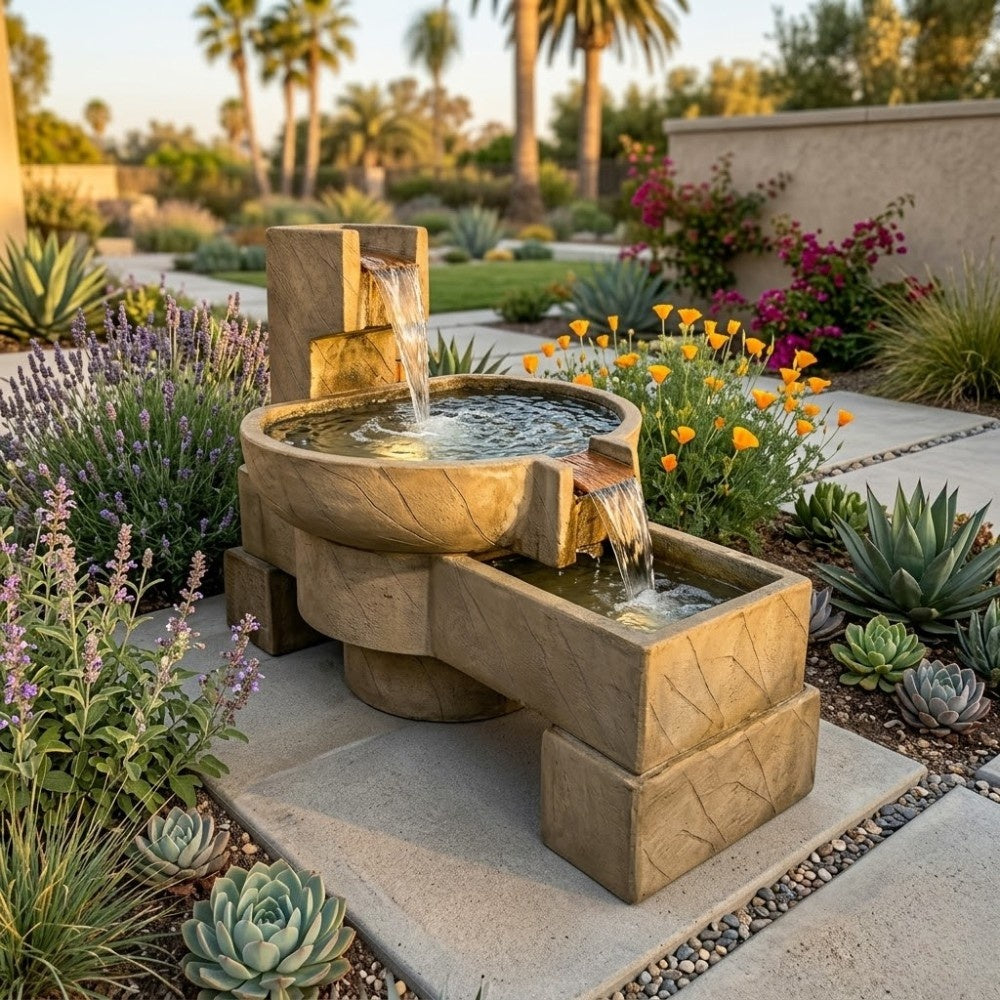
Tiered cascade fountains guide water from one basin to another, creating a series of smaller drops that blend into a softer, more continuous sound. If you're drawn to that style, you'll find even more options in our Tiered Outdoor Fountains collection. Many buyers expect the tallest fountain to be the loudest, but the number and length of the drops often matter more than the overall height.
Bowl fountains take a simpler approach. Water rises through the centre before spilling over the edge in one uninterrupted sheet, creating a cleaner, more noticeable sound. If that style appeals to you, it's worth exploring our Outdoor Bowl Fountains collection alongside these designs rather than treating them as an alternative.
Some cascade fountains are small enough to bring that same movement onto a patio table, garden wall or entrance step. Our Outdoor Tabletop Fountains collection is ideal for spaces where you want the sound of moving water nearby without making it the centrepiece of the entire garden.
One of the biggest surprises for buyers is that sound has very little to do with size. A large fountain with several gentle drops can be quieter than a much smaller fountain where water falls a longer distance. Near a road, the stronger sound can help soften background noise. Close to a dining area or seating space, a quieter cascade is often the better choice.
Cascade fountains also need a little more attention than simpler designs. Water moving across multiple levels creates more opportunities for foam to appear when dust, pollen or debris build up, and occasional splash is simply part of how cascading water behaves. Thinking about the surface beneath the fountain before it arrives saves much more work later.
This collection is for anyone who wants the movement of water to be just as important as the fountain itself.
FAQs
Common Questions About Cascade Fountains
Not necessarily. The sound depends far more on how far the water falls and how quickly it moves than on the fountain's overall size. A tall cascade with several gentle drops can sound quieter than a much smaller fountain with one long fall into a basin.
It can be, depending on the setting. Hard surfaces such as patios, walls and fencing reflect sound, making it more noticeable than it would be in an open part of the garden. Starting with a lower water flow and increasing it gradually is usually the easiest way to find a comfortable level.
Allow enough room for comfortable movement around the fountain as well as enough visual space for it to become part of the landscape rather than an obstacle. Choosing a basin that's proportionate to the surrounding area generally creates the most balanced result.
Think about both the backdrop and the normal viewing distance. Smaller fountains suit intimate spaces, while larger gardens benefit from taller designs that remain visible from further away. The most common mistake is choosing a fountain that's too small for the setting.
Most look their best just outside the main walking route rather than directly in the centre of it. Popular locations include the end of a path, behind a bench or seating area, or wherever the eye naturally settles when stepping into the garden. Avoid placing them directly beneath trees if possible, as leaves increase maintenance.
Generally, yes. Water passes over more edges before returning to the basin, making occasional splash part of normal operation rather than a fault. Stone or sealed paving beneath the fountain provides the most practical surface.
Foam usually develops when organic debris such as pollen, leaves or dust collects in the water. Because cascade fountains constantly agitate the water, they tend to reveal this sooner than simpler fountain designs. Soap residue left behind after cleaning can also cause foaming.
It's mineral scale left behind as water evaporates. Vinegar is usually enough to remove it safely. If your fountain has copper spillways, avoid harsh calcium removers because they can permanently damage the finish.
Check the water level and remove debris regularly, clean the pump and basin every month, and give the fountain a more thorough clean each year. In freezing climates, drain the fountain and store the pump indoors before winter to help prevent damage.