


What a room does to the sound
Most people shopping indoor waterfalls already know where they want one to go. It might be an entryway, the wall behind a reception desk, or the end of a hallway that's always felt unfinished. The location is usually decided long before the fountain is. What buyers are really trying to picture is how it will look—and sound—once it's running every day.
By the time someone reaches this collection, they've usually moved beyond small tabletop fountains. These are larger statement pieces designed to become part of the room, whether mounted to a wall or standing on their own. The space they're going into is often one that's seen and used every day.
That leaves one decision: how the fountain fits the room itself.
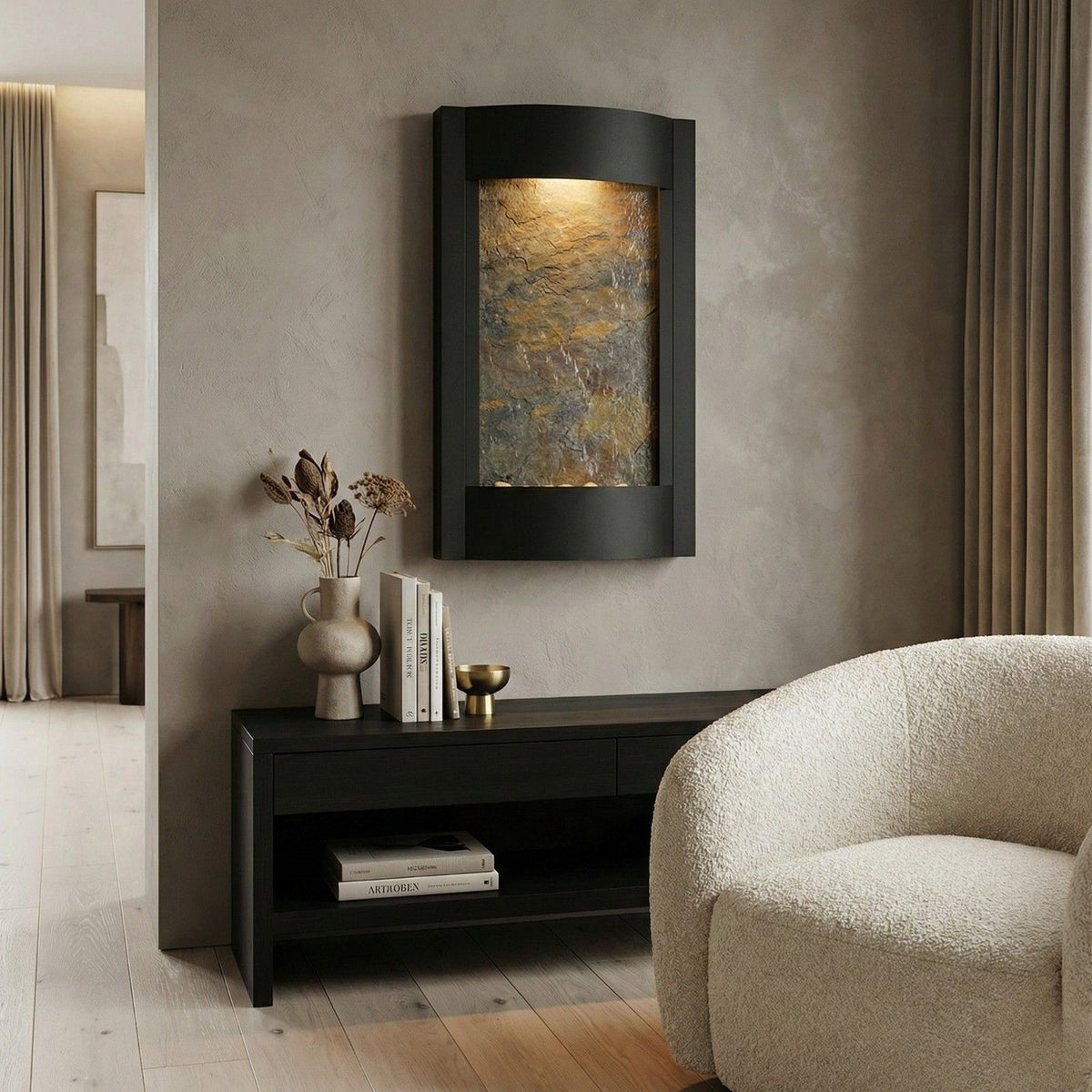
Wall-mounted waterfalls are the natural choice where floor space needs to stay open. They work well in entryways, offices, and behind reception desks because they create visual impact without extending into walkways. If that sounds like the direction you're heading, it's worth comparing our Indoor Wall Fountains collection. One thing buyers often discover later is that the wall itself affects the experience. Hard surfaces reflect the sound of falling water, making it more noticeable than many expect.
Freestanding waterfalls create a different impression. Instead of becoming part of the wall, they become part of the room, making them easier to reposition if the layout changes later. Our Indoor Floor Fountains collection is worth exploring alongside wall-mounted styles rather than instead of them, since each solves the same problem in a different way.
For larger spaces, Indoor Water Walls create a natural divider without closing the room off. Water flows down both sides, allowing the feature to be appreciated from multiple angles while gently separating one area from another. With no solid surface directly behind the water, the sound also carries differently through the space.
One thing surprises more buyers than almost anything else: indoors, you're not choosing how loud the water will be—you're choosing whether you'll notice the water or the pump. Outside, wind, traffic and everyday background noise cover the pump's hum. Indoors, quiet rooms and hard surfaces make every sound more noticeable. A well-positioned pump disappears behind the sound of flowing water. A poorly positioned one becomes part of the room.
Indoor waterfalls also behave differently over time. Smooth surfaces show mineral deposits sooner than textured finishes, simply because there's nowhere for them to hide. Narrow streams create more agitation than broad sheets of water, making foam easier to notice when maintenance is overdue.
This collection is for bringing the sound of moving water indoors without letting the mechanics become the thing people remember.
FAQs
Common Questions About Indoor Waterfalls
Usually both, but the balance between them depends on the installation. Every fountain pump produces a gentle hum, and because indoor spaces don't have wind or traffic to mask it, you'll notice it more than you would outdoors. Once the water is flowing properly, it covers most of that sound. When the water level drops or the pump touches the side of the basin, the pump becomes much easier to hear.
Generally louder than the same fountain outdoors, even though nothing about the fountain itself has changed. Walls, glass and hard flooring reflect sound instead of letting it disperse, so the water stays present in the room. The overall size of the fountain matters less than the height of the water drop and the flow rate.
Most of the time it's vibration rather than a faulty pump. If the pump is touching the basin wall, that vibration transfers into the structure and becomes much more noticeable. Repositioning the pump or placing rubber, foam or a flat stone beneath it usually solves the problem.
They work best against walls that already define the room, such as entryways, hallways and the wall behind a reception desk. Corner installations also work well because they add height without taking up much floor space. The one place worth avoiding is anywhere people regularly stop to stand and talk.
Choose the height based on how far away people will usually see it rather than on the wall itself. Smaller fountains suit shorter viewing distances, while larger spaces benefit from taller designs. The most common mistake is choosing a fountain that's too small, leaving the water feature feeling lost against the wall.
Maintenance is straightforward. Check the water level each week, clean the basin and pump about once a month, and give the entire fountain a more thorough clean once a year. Because it's indoors, you'll usually notice when the water needs attention long before it becomes a problem.
Dust, organic particles and soap residue are the most common causes. As fine debris circulates, it can create foam, especially in fountains with narrower water flow. If detergent was used during cleaning and not completely rinsed away, foam can appear almost immediately after restarting the pump. Fresh water usually clears the issue, while a fountain-safe defoamer helps remove bubbles without addressing the underlying cause.
It's mineral scale left behind as tap water evaporates. Smooth waterfall panels show it sooner because the residue has nowhere to blend in. White vinegar, followed by a plastic brush or non-abrasive pad, is usually enough to remove it. Strong chemical removers are best avoided because they can damage finishes such as copper or dyed concrete.
Usually, yes. Reducing the pump's flow, making sure it isn't touching the basin, and releasing trapped air after refilling often reduce unwanted noise. It's much easier to begin with a lower flow and increase it gradually than to start at full power and work backwards.